
How Arrest Warrants Work in Posey County
Indiana Code 35-33-2-1 lets a judge issue an arrest warrant once an indictment is filed. A judge can also find probable cause from an affidavit or sworn testimony. Probable cause means facts giving a reasonable basis to believe an offense occurred and the named person committed it. Criminal matters in Posey County go to Posey Circuit Court under the local rules. Officers, marshals, deputies, and prosecutors can supply the facts. The court alone makes the issuance decision. Once signed, the warrant directs law enforcement to take the person into custody. You can read the official language in the General Assembly's arrest-warrant chapter.
Posey County Has No Warrant-Only Portal
The Posey County sheriff posts no public warrant-only search. Indiana's MyCase system can still show a warrant event inside a public criminal case. The judiciary is clear, though: it is not a warrant-only search, and it does not hold every arrest warrant statewide. So a blank result does not prove that no warrant exists. Search by party or case number. Narrow the result to Posey Circuit Court and read the chronological events. Then call the clerk at (812) 838-1306 or the sheriff and jail at (812) 838-1321. Posey County Dispatch, (812) 838-1320, can route a non-emergency question. A written APRA request is another route when you can describe a specific record. Do not ask for prohibited confidential material.
Key point: MyCase is a useful first check, not a final statement that an arrest warrant is active, served, recalled, or sealed.
Arrest Warrants: What They Contain
A warrant and its case file carry several identifiers. Public access varies, especially while an arrest is still pending. Indiana Administrative Rule 9 also allows a probable-cause affidavit to be withheld temporarily when access could create a substantial risk of harm. In Posey County, the court later decides what becomes public.
| Case number | The uniform case number, such as 65C01-YY-MM-FX-####, identifies the court and case. |
|---|---|
| Named subject | The person the warrant directs officers to arrest; identity must be confirmed beyond a similar name. |
| Charge or offense | The alleged criminal count tied to the case, not a conviction. |
| Issuing court | Posey Circuit Court for local criminal cases, with code 65C01. |
| Bond information | Any amount or release condition actually set by the court; no countywide warrant bond schedule was found. |
| Status and dates | Issue, service, return, recall, and later docket events when public. |
The Indiana e-Tax Warrant page documents a separate tax-lien and collection system.
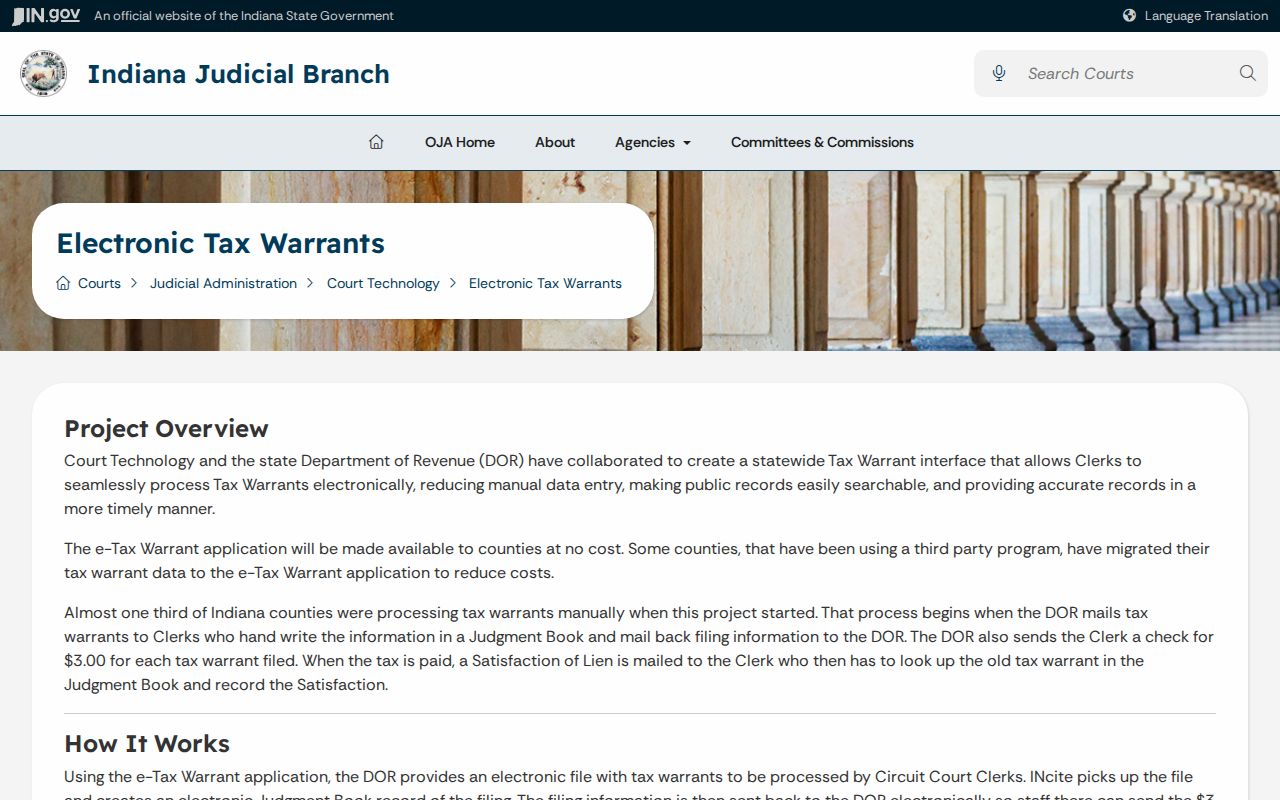
That administrative use of the word is not a criminal arrest order. It offers no Posey County arrest warrant lookup at all.
Posey County Arrest Warrant Court Codes
Posey Circuit Court uses code 65C01. Posey Superior Court uses 65D01. The old county court code 65E01 is abolished, so these codes help separate a live Posey County file from a stale reference or another county's record. They also let the clerk pull the right docket when two people share a name.
- Issued
- The judge has signed the warrant.
- Served
- Law enforcement has carried out the arrest command.
- Returned
- The serving agency has reported action back to the court.
- Recalled or quashed
- The court has withdrawn or set aside the warrant.
A docket entry can lag behind real-world action. Give the clerk a case number when you have one. Ask which event controls current status, and never mistake a place name, police incident number, or citation number for the Posey County court case number.
Posey County Arrest Warrants Need Two Checks
In Posey County, the court and the sheriff each hold half the answer. The clerk can verify the warrant, the case number, the judge's entries, and whether a recall was filed. The sheriff handles service, return, booking, and custody questions. So rely on the live offices, not on an old copy of a page. If a public MyCase event conflicts with what a clerk tells you by phone, note the case number and event date, then ask the record keeper to explain the current official entry. Indiana's online summary may omit confidential material. It can also lag behind the court file. A narrow records request helps here: identify the case, the date range, and the document you want.
How Warrants Get Served in Posey County
The Posey County Sheriff's Office serves criminal and civil process and runs the county jail. City police and town marshals can also arrest within their own authority. Service may happen at direct contact, a traffic stop, or another lawful encounter. The sheriff publishes no special warrant-surrender hours. Assume no walk-in procedure exists. After an arrest, jail processing and a court appearance follow the warrant and release rules for that case. Indiana Criminal Rule 2.6 directs courts to use the least restrictive release conditions that reasonably assure appearance and safety. It does not promise release or set a universal Posey County bond. The issuing court controls the order. The sheriff handles custody.
Posey County Arrest Warrant Affidavit Access
A warrant and the affidavit behind it are related records. They do not always open at the same time. Posey County requesters meet this wall when Indiana court-access rules let a probable-cause affidavit stay closed because release could place someone at substantial risk of harm. Juvenile, sealed, expunged, and other confidential material may be withheld or redacted as well. The clerk comes first. The Indiana judiciary's records instructions send a court-record requester there before anywhere else. Ask for a specific case, date range, document type, or warrant event. A sheriff-held service return or log follows a different route. Identify the record and address an Indiana Access to Public Records Act request to the office that maintains it. APRA stops there. It does not override the court rules governing confidential court files. Note: a public case summary is not the official record, and a redaction or missing document does not decide warrant status.
Arrest Warrants, Summonses, and Bench Warrants
Posey County courts reach for different tools. An arrest warrant authorizes custody on probable cause. A summons simply orders the person to appear, with no arrest command attached. A bench warrant usually follows a missed hearing or a broken court order, so the label matters less than the signed order and the current docket.
| Feature | Arrest Warrant | Summons | Bench Warrant |
|---|---|---|---|
| What it orders | Arrest and custody | Appearance on a stated date | Arrest after nonappearance or noncompliance |
| Basis | Probable cause of an offense | A charge handled without initial custody | A missed duty in an existing case |
| Issuer | Judge | Court under applicable procedure | Judge handling the case |
| Response | Confirm, obtain counsel, plan surrender | Appear as directed | Ask counsel and the court about recall |
Posey County Arrest Warrant Verification
The official Indiana ePay page shows the state payment channel itself, with no person's record displayed.
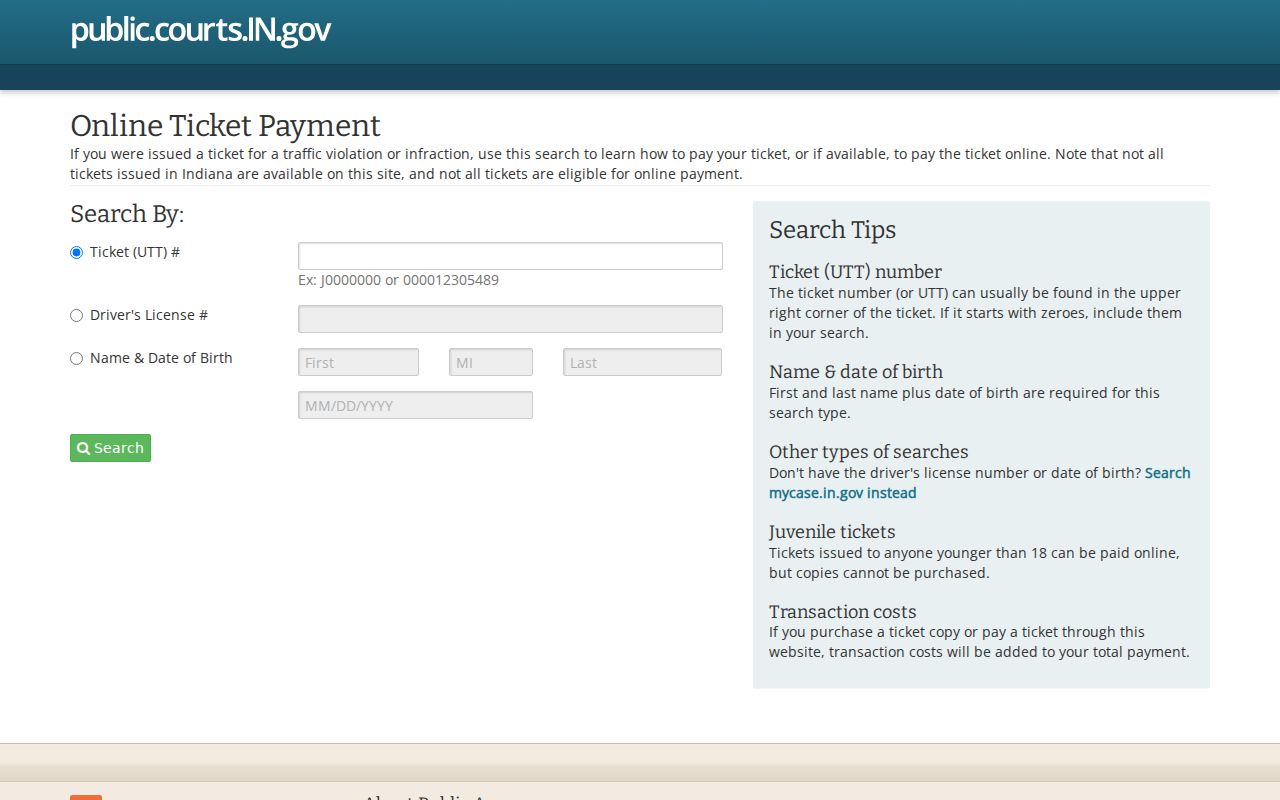
That blank page is a cue. Confirm the case and payment eligibility before entering information. A caller can claim a warrant, and caller ID proves nothing. Spoofing a local number is easy. Posey County residents faced that pattern in 2025 and again twice in 2026, with reports citing a missed court date, an arrest warrant, or bond and a push for quick payment. The reported sheriff warning said the office would not seek financial information by phone.
- End an unsolicited demand for money. Do not use the callback number the caller supplies.
- Search the public case through MyCase using a case number or party name, while remembering its limits.
- Dial the clerk or sheriff from an official county page and ask which office can confirm the record.
- Ask whether the warrant remains active and whether a court order has recalled it.
- Consult a lawyer before arranging surrender, bond, or a court filing.
The May 2026 scam report backs a simple rule. Urgency and caller ID do not authenticate a court order.
Handling an Arrest Warrant in Your Name
Confirm the Posey County court, case number, charge, issue date, and current status before acting. Then call a criminal defense lawyer. Counsel can weigh a planned surrender, release or bond, and a motion asking the judge to recall or quash the warrant, depending on the signed orders. Only the issuing court can withdraw its warrant. Do not assume a payment alone clears the order. Keep receipts and copies, but verify that a signed recall appears in the official record. The Posey County clerk keeps the Circuit and Superior Court records. Staff can identify docket entries and accepted payment channels. They cannot give legal advice or promise what a judge will do. The Indiana State Police site lists statewide public-safety services. None is offered as an all-warrant public search.

A criminal-history product is not warrant confirmation. The federal courthouse page for Evansville lists the regional federal court contact.
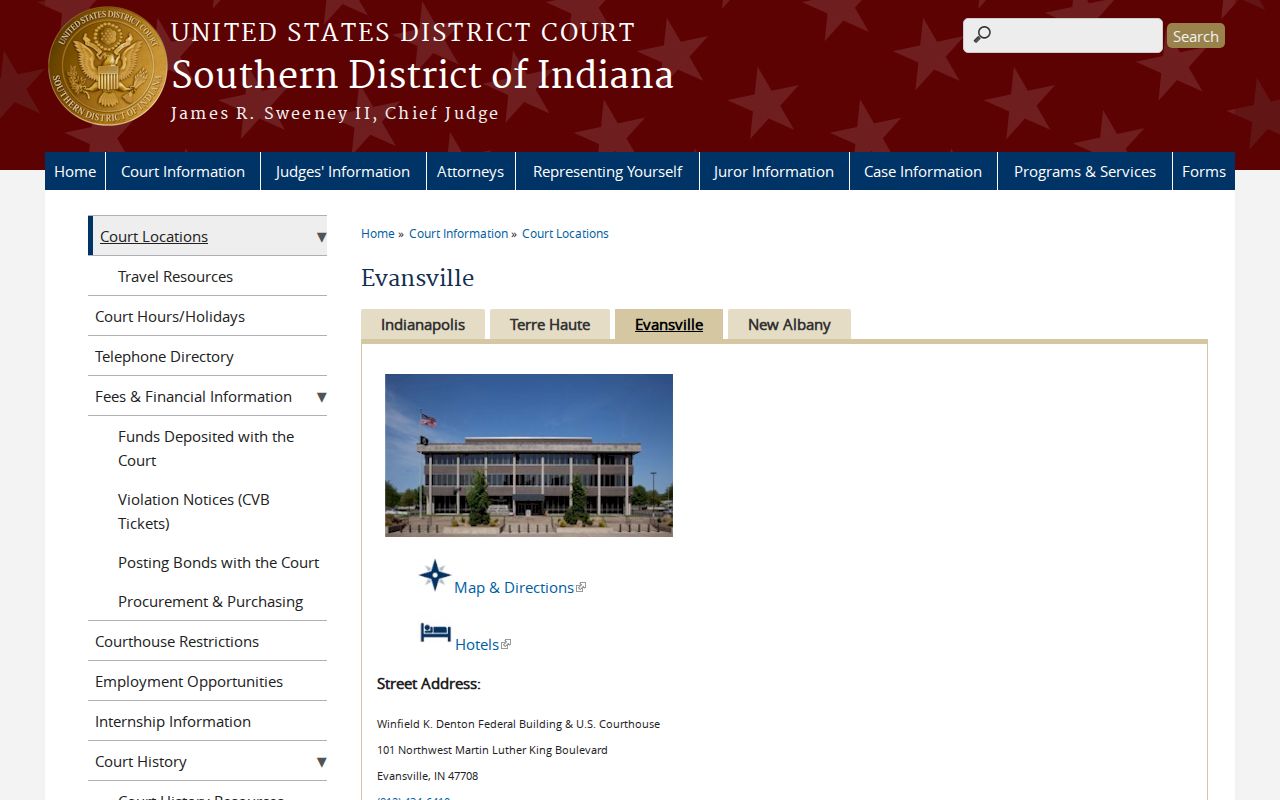
A federal matter is a different track. It runs through a separate court and the U.S. Marshals, not a Posey County Circuit Court warrant search.
Important: Talk with a lawyer before surrender. An active arrest warrant can lead to custody during any lawful police contact.